Introduction
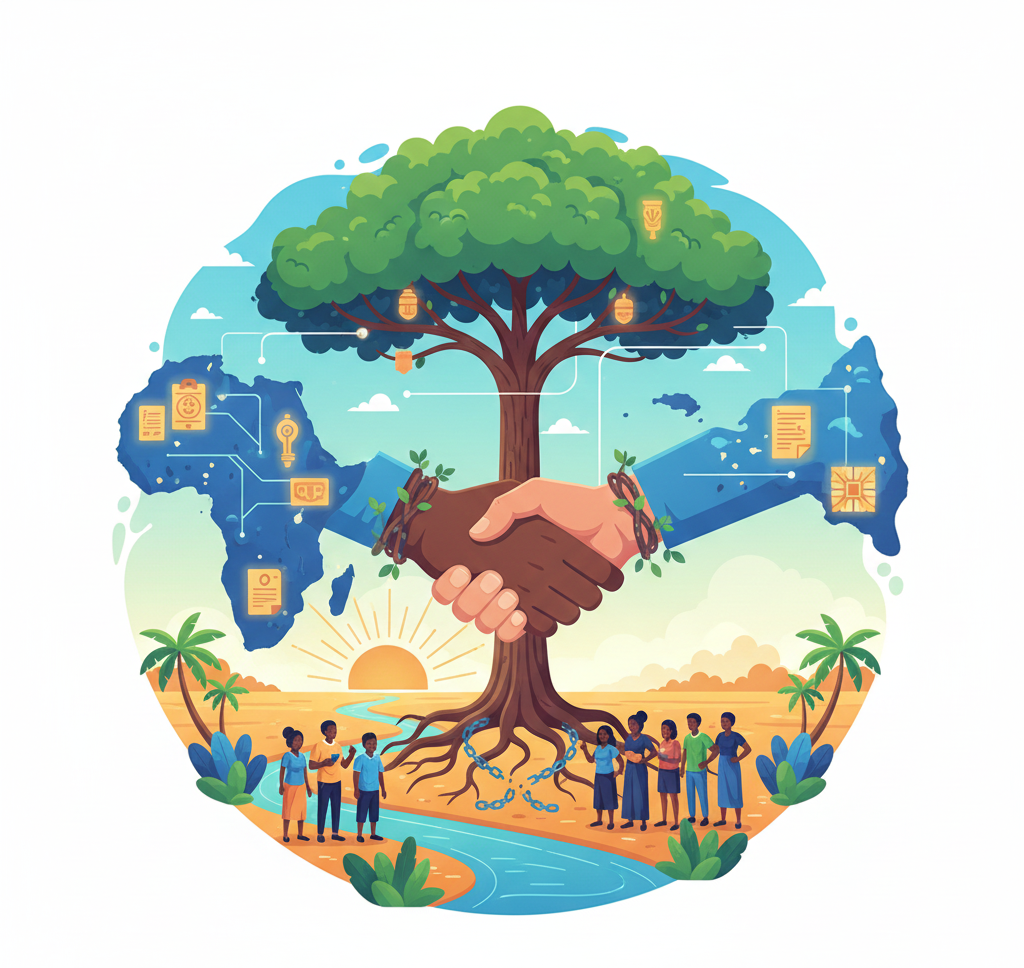
The relationship between Africa and the Caribbean is rooted in one of history’s greatest injustices—the transatlantic slave trade that forcibly displaced millions of Africans to Caribbean shores between the 16th and 19th centuries. Today, as our regions forge new economic and political partnerships, there is a parallel awakening: a movement to reclaim our shared narrative, preserve our intertwined heritage, and pursue justice for historical wrongs that continue to shape our present realities.
This is not merely about looking backward. The quest for reparative justice is fundamentally about creating a more equitable future, healing intergenerational trauma, and ensuring that the full story of African-Caribbean resilience, resistance, and contribution is told and honored.
Understanding Reparative Justice
Reparative justice extends beyond financial compensation, though that remains an important component. It encompasses:
1. Acknowledgment and Apology Official recognition by former colonial powers of the atrocities committed, their systematic nature, and their lasting consequences. Several European nations have begun this process, but comprehensive acknowledgment remains incomplete.
2. Restitution The return of stolen cultural artifacts, restoration of historical sites, and compensation for economic exploitation that funded European industrialization while impoverishing African and Caribbean communities.
3. Rehabilitation Addressing ongoing disparities in wealth, health, education, and opportunity that directly trace to slavery and colonialism through targeted development programs and preferential trade arrangements.
4. Guarantees of Non-Repetition Systemic changes ensuring that exploitative practices—whether in labor, trade, or development finance—are not replicated in modern forms.
5. Cultural Restoration Supporting efforts to reconnect diaspora communities with African heritage, preserve endangered languages and traditions, and correct historical narratives that marginalized or erased African and Caribbean contributions.
The Caribbean Reparations Movement
The Caribbean has been at the forefront of organized reparations advocacy:
CARICOM Reparations Commission (CRC) Established in 2013, the CRC has developed a comprehensive ten-point plan demanding reparatory justice from former colonial powers. The plan includes:
- Full formal apology
- Repatriation programs
- Indigenous peoples development program
- Cultural institutions support
- Public health crisis intervention (addressing health disparities with colonial origins)
- Illiteracy eradication (addressing educational deficits from denied education during slavery)
- African knowledge program (restoring African contributions to science, philosophy, and culture)
- Psychological rehabilitation (trauma counseling and mental health support)
- Technology transfer and financial support
- Debt cancellation
The commission has made significant progress in raising international awareness and has engaged several European governments in preliminary discussions.
National Initiatives Individual Caribbean nations have also taken action. Jamaica established a National Reparations Commission, Barbados has incorporated reparations into foreign policy, and several Eastern Caribbean states have passed parliamentary resolutions supporting reparations claims.
Africa’s Parallel Movements
African nations and continental bodies have pursued complementary initiatives:
African Union Position The African Union has endorsed reparations claims and established mechanisms to coordinate continental advocacy. The AU’s transitional justice policy framework explicitly addresses the need for reparations for slavery and colonialism.
National Truth Commissions Countries like South Africa, Rwanda, and Ghana have established truth and reconciliation processes that, while primarily focused on more recent conflicts, have set precedents for addressing historical injustices.
Cultural Repatriation Campaigns African nations are increasingly demanding the return of cultural artifacts held in European museums. Nigeria’s successful recovery of Benin Bronzes and Ethiopia’s ongoing campaign for Maqdala treasures demonstrate growing momentum.
Pan-African Parliament Resolutions The Pan-African Parliament has passed multiple resolutions supporting reparations and calling for coordinated African-Caribbean advocacy strategies.
The Heritage Preservation Imperative
Parallel to justice claims is the urgent work of preserving and celebrating African-Caribbean heritage:
UNESCO World Heritage Sites Both regions have successfully designated sites of historical significance related to the slave trade as World Heritage Sites, including:
- Gorée Island, Senegal
- Elmina Castle, Ghana
- Historic Bridgetown and Garrison, Barbados
- Blue and John Crow Mountains, Jamaica
These designations provide international recognition and resources for preservation while educating global audiences about our shared history.
Digital Archives and Oral History Projects Technology is enabling unprecedented documentation efforts. Projects like the “Slave Voyages” database have digitized records of over 36,000 transatlantic slave voyages. Caribbean and African institutions are collaborating to create comprehensive digital archives of oral histories, preserving first-person accounts and traditional knowledge before they are lost.
Language Revitalization Many Caribbean Creole languages and African diaspora languages face extinction. Linguists and community activists are working to document, teach, and revitalize these languages as crucial elements of cultural identity. Jamaica’s official recognition of Patois and efforts to standardize Haitian Creole represent important progress.
Cultural Festivals and Exchanges Events like Emancipation Day celebrations, Panafest in Ghana, and Crop Over in Barbados serve as living expressions of cultural continuity while creating opportunities for African-Caribbean exchange and solidarity building.
The Economic Dimensions
Reparative justice has significant economic implications that intersect with contemporary Africa-Caribbean relations:
Development Finance Reparations could include preferential trade terms, debt forgiveness, and development assistance specifically designed to address historical economic exploitation. Some economists estimate that if slavery-era profits had been invested in African and Caribbean development rather than European industrialization, current GDP figures would differ by trillions of dollars.
Knowledge Economy Restitution Indigenous knowledge systems—agricultural techniques, medicinal plants, architectural methods—were appropriated without compensation. Modern benefit-sharing agreements for genetic resources and traditional knowledge represent a form of future-oriented reparative justice.
Diaspora Investment The African diaspora in the Caribbean and the Caribbean diaspora globally represent significant economic potential. Heritage tourism, diaspora bonds, and investment incentive programs can channel resources toward development while strengthening cultural connections.
Legal and Diplomatic Strategies
The path to reparative justice involves complex legal and diplomatic navigation:
International Law Precedents While no international tribunal has ruled specifically on slavery reparations, precedents exist. Holocaust reparations, reparations for Japanese-American internment, and recent judgments against corporations for apartheid-era activities establish that historical injustices can be legally addressed decades or centuries later.
Strategic Litigation Caribbean governments and civil society organizations are exploring legal avenues in international courts, national courts in former colonial powers, and human rights bodies. While challenges are significant, litigation serves important awareness-raising and pressure-building functions even before favorable rulings.
Diplomatic Coalition Building Success requires sustained diplomatic coordination. African and Caribbean nations are leveraging forums like the United Nations, Commonwealth, and bilateral relationships to keep reparations on international agendas. The support of progressive governments in former colonial powers provides important allies.
Challenges and Counterarguments
The reparations movement faces substantial obstacles:
Political Resistance Many European governments resist reparations claims, citing concerns about precedent, practical difficulties in determining beneficiaries, and political unpopularity among domestic constituencies.
Complexity of Claims Determining appropriate reparations calculations, identifying liable parties centuries after events, and establishing clear beneficiary communities present genuine complexities requiring creative solutions.
Compensation vs. Development Some argue that forward-looking development assistance is more practical than backward-looking compensation. Reparations advocates counter that both approaches are necessary and that acknowledgment of historical injustice is intrinsically valuable.
Intra-Regional Disparities Both Africa and the Caribbean contain diverse communities with varying degrees of connection to slavery. Ensuring equitable benefit distribution within regions requires careful consideration.
Models for Moving Forward
Despite challenges, viable pathways exist:
Truth and Reconciliation Model Adapted from South Africa’s experience, this approach prioritizes acknowledgment, storytelling, and healing alongside material reparations. It may be more politically palatable while still addressing core justice concerns.
Graduated Implementation Rather than seeking comprehensive settlements immediately, incremental progress through specific programs—educational initiatives, museum collaborations, cultural exchanges—can build momentum while delivering tangible benefits.
Private Sector Engagement Corporations and institutions that profited from slavery are increasingly acknowledging their histories and considering reparative actions. Universities, banks, and insurance companies have begun research, apologies, and targeted investments.
Regional Solidarity Mechanisms African and Caribbean nations can strengthen reparations claims by demonstrating regional unity, coordinating diplomatic strategies, and presenting joint proposals rather than fragmented individual claims.
The Role of Civil Society
Grassroots movements are essential to sustaining momentum:
Community Organizations Local heritage societies, cultural centers, and advocacy groups keep reparations issues visible, educate communities, and pressure governments to maintain focus on justice claims.
Academic Research Scholars across disciplines—history, economics, law, sociology—provide the evidence base for reparations claims and develop theoretical frameworks for implementation.
Arts and Culture Writers, musicians, filmmakers, and visual artists create works that explore slavery’s legacy, celebrate resistance, and imagine reparative futures, shaping public consciousness and building emotional connections to justice movements.
Youth Engagement Younger generations in both regions are increasingly interested in heritage, identity, and justice. Youth-led movements bring energy, innovation, and sustainability to advocacy efforts.
Conclusion: Justice as Foundation for Partnership
As Africa and the Caribbean deepen economic cooperation through trade agreements, investment partnerships, and infrastructure projects, we must ensure these relationships are built on a foundation of historical truth and justice. Reparative justice is not a distraction from development—it is essential to authentic, equitable partnership.
The movement for reparations and heritage preservation represents more than claims against former colonial powers. It is about African and Caribbean peoples reclaiming agency over our own narratives, honoring our ancestors’ resilience, and ensuring future generations inherit not only economic opportunity but also cultural pride and historical understanding.
Progress will be neither quick nor easy. But the growing momentum—manifested in CARICOM resolutions, African Union positions, academic research, cultural festivals, and grassroots activism—demonstrates that this movement is irreversible. The question is not whether reparative justice will be achieved, but when, and in what form.
For policymakers, business leaders, and citizens in both regions, the imperative is clear: support the reparations movement, preserve our shared heritage, and ensure that the new Africa-Caribbean partnership is grounded in justice, dignity, and mutual respect. Only then can we truly build a future worthy of our ancestors’ sacrifices and our children’s aspirations.