Introduction
Over the past decade, mobile money has evolved from a novel experiment in Kenya to a continent-wide phenomenon that is fundamentally changing how Africans and Caribbean citizens conduct business, save money, and access financial services. With over 548 million registered mobile money accounts in Sub-Saharan Africa alone and rapidly growing adoption across Caribbean nations, this digital revolution presents transformative opportunities for economic integration between our two regions.
The Current Landscape
Mobile money adoption has reached critical mass in both regions, though with distinct characteristics:
In Africa:
- East Africa leads globally with 76% mobile money account penetration
- West Africa shows 52% penetration with rapid growth
- Transaction values exceeded $490 billion in 2024
- M-Pesa alone processes over 12 billion transactions annually
In the Caribbean:
- Jamaica’s digital payment adoption grew 156% since 2020
- Trinidad and Tobago saw mobile wallet usage increase 89% year-over-year
- Regional remittance corridors are increasingly digital
- CARICOM nations are coordinating digital payment infrastructure
Breaking Down Barriers
The convergence of mobile money ecosystems between Africa and the Caribbean is addressing several historical challenges:
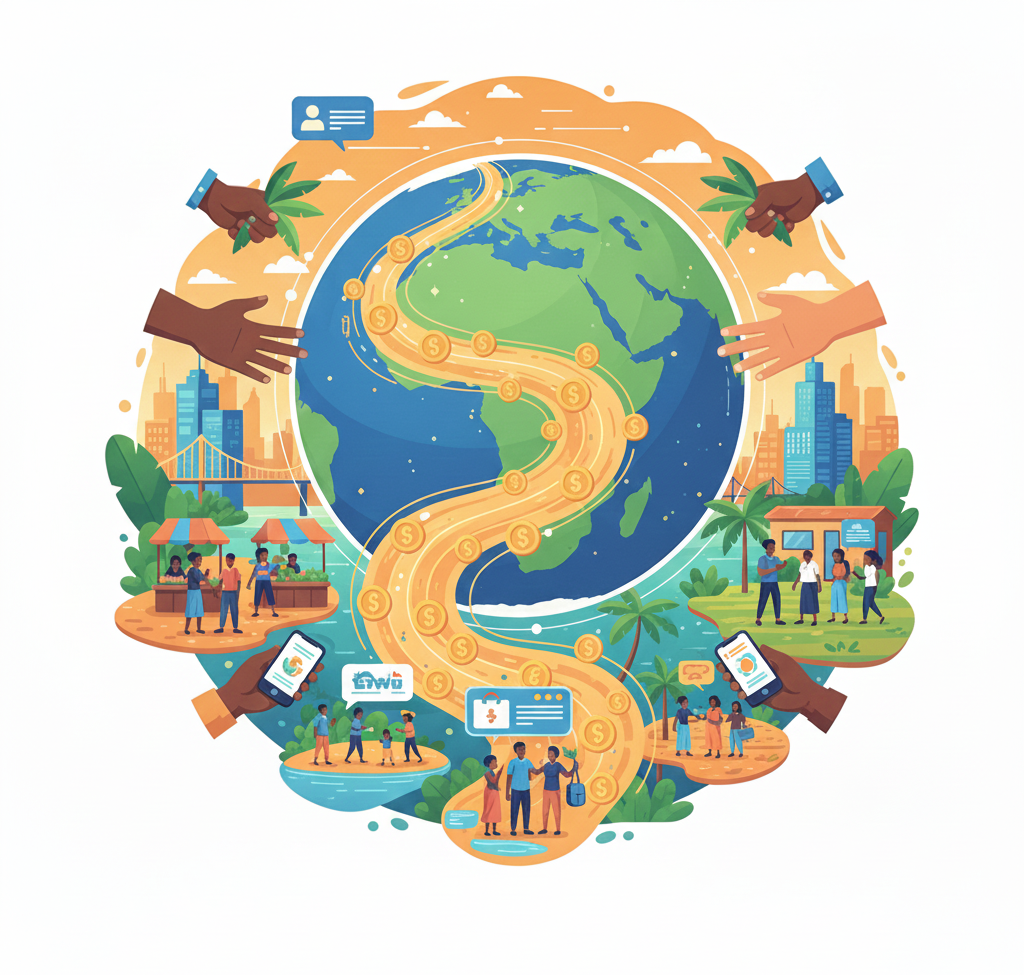
1. Remittance Costs Traditional remittance channels have long charged exorbitant fees—often 8-12% per transaction. Digital payment platforms are reducing these costs to 2-4%, saving diaspora communities billions annually. A Jamaican worker in London can now send money home for a fraction of previous costs, with funds arriving in minutes rather than days.
2. Cross-Border Trade Friction Small and medium enterprises previously faced significant barriers in cross-regional trade. Digital payment integration is enabling a Ghanaian textile exporter to receive instant payment from a Caribbean retailer, eliminating letters of credit, bank transfer delays, and currency exchange complications.
3. Financial Inclusion Over 350 million adults in Africa and 2.4 million in the Caribbean remain unbanked. Mobile money provides a pathway to financial services without requiring traditional bank infrastructure. A farmer in rural Uganda and a fisher in rural Grenada now have equal access to digital financial tools.
Innovation Driving Growth
Several technological innovations are accelerating the mobile money revolution:
Interoperability Standards Organizations like the GSMA are developing protocols allowing different mobile money platforms to communicate seamlessly. This means a customer using MTN Mobile Money in Ghana can send funds to someone using Digicel Mobile Money in Haiti—a technical achievement with profound economic implications.
Blockchain Integration Forward-thinking platforms are incorporating blockchain technology to enhance security, reduce transaction costs, and create transparent audit trails. This is particularly valuable for cross-border transactions where trust and verification have traditionally been expensive.
AI-Powered Risk Assessment Artificial intelligence is enabling mobile money providers to extend credit and insurance products to previously underserved populations. Machine learning algorithms analyze transaction patterns to assess creditworthiness without requiring traditional collateral.
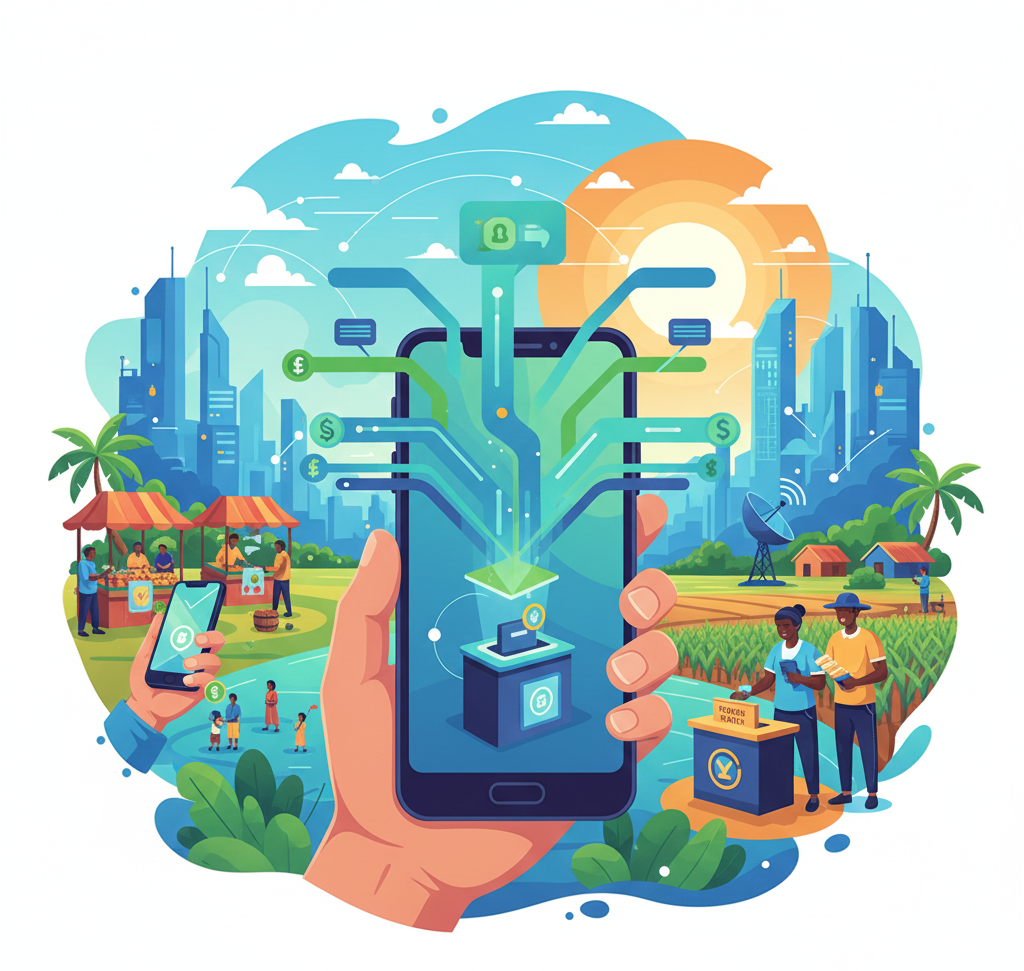
Super App Ecosystems Following Asia’s model, African and Caribbean platforms are evolving into comprehensive financial ecosystems. Users can now pay bills, purchase insurance, invest in mutual funds, and access government services—all within a single mobile application.
Regulatory Harmonization
The success of cross-regional mobile money integration depends significantly on regulatory cooperation. Encouraging developments include:
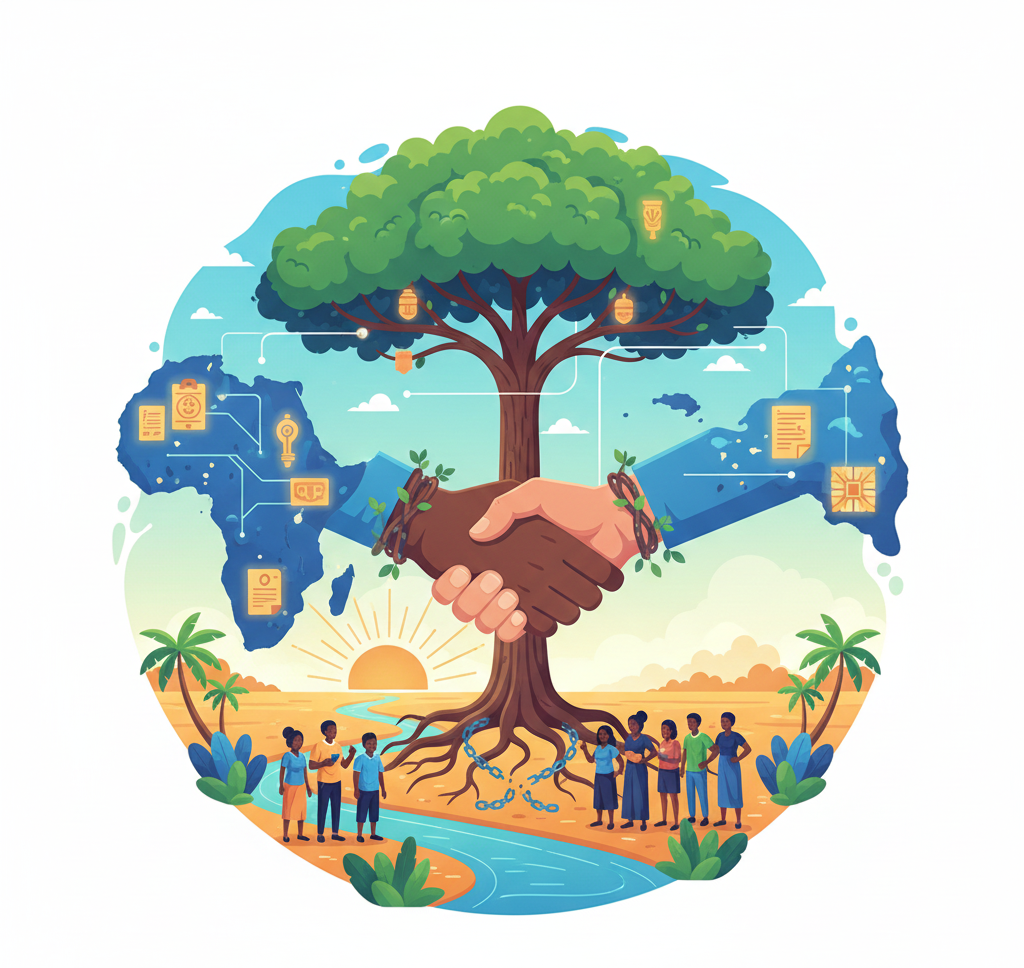
- The African Continental Free Trade Area (AfCFTA) including provisions for digital payment harmonization
- CARICOM’s Digital Single Market initiative prioritizing payment interoperability
- Bilateral agreements between specific African and Caribbean nations on financial technology cooperation
- Central banks increasingly adopting proportionate regulation that balances innovation with consumer protection
Challenges and Solutions
Despite impressive progress, several challenges require attention:
Infrastructure Gaps Rural connectivity remains inconsistent. Solutions include satellite internet deployment, community WiFi initiatives, and platforms designed for low-bandwidth environments.
Digital Literacy Not all potential users have the skills to navigate digital platforms. Community training programs and simplified user interfaces are addressing this barrier.
Cybersecurity Concerns As transaction volumes grow, so do security risks. Industry-wide security standards, two-factor authentication, and blockchain verification are enhancing platform security.
Currency Exchange Complexity Real-time currency conversion between African and Caribbean currencies presents technical challenges. Cryptocurrency stablecoins and real-time foreign exchange APIs offer potential solutions.
The Path Forward
The trajectory is clear: digital payments will continue expanding and integrating across Africa and the Caribbean. Key opportunities include:
1. Youth Engagement With median ages of 19 in Africa and 32 in the Caribbean, younger populations are digital natives comfortable with mobile-first financial services. Platforms designed for this demographic will drive adoption.
2. Merchant Ecosystem Development As consumer adoption grows, merchant acceptance must keep pace. QR code payment systems, point-of-sale integration, and merchant financing are accelerating business adoption.
3. Government Service Digitalization Governments increasingly recognize digital payments as infrastructure for delivering social services, collecting taxes, and reducing corruption. Digital government payment integration will normalize mobile money usage.
4. Diaspora Connection The 140 million-strong African diaspora and significant Caribbean diaspora communities represent a massive market for digital remittance and investment products connecting them to their home regions.
Conclusion
The mobile money revolution is not merely a technological upgrade—it represents a fundamental restructuring of financial inclusion and economic opportunity across Africa and the Caribbean. As platforms become more sophisticated, regulations more harmonized, and ecosystems more integrated, we are witnessing the emergence of a truly pan-African and pan-Caribbean digital economy.
For businesses, the message is clear: digital payment integration is no longer optional but essential for accessing growing markets. For policymakers, supporting regulatory harmonization and infrastructure development will determine which regions lead this transformation. For citizens, mobile money represents unprecedented access to financial tools that previous generations could only imagine.
The question is no longer whether digital payments will transform Africa-Caribbean commerce, but how quickly stakeholders can adapt to maximize this historic opportunity.